

What Is ALTCS and How Does It Connect to DDD Services?
What Is ALTCS and How Does It Connect to DDD Services?
If you’ve started exploring services for a loved one with a developmental disability, you’ve probably run into two sets of initials: DDD and ALTCS. They’re related but not the same, and the difference confuses almost every family at first. Here’s how the two programs fit together — and why you’ll likely need both.
The Short Version
DDD decides who is eligible. ALTCS pays for the long-term services.
- The Division of Developmental Disabilities (DDD) determines whether a person has a qualifying developmental disability.
- The Arizona Long Term Care System (ALTCS) is Arizona’s Medicaid program for long-term care. It provides the funding that pays for services like attendant care, habilitation, and respite.
Think of DDD as the door and ALTCS as the funding that makes what’s behind that door affordable. Most families who want funded, ongoing in-home services go through both.
What Is ALTCS, Exactly?
ALTCS is the long-term-care branch of Arizona’s Medicaid system (AHCCCS). It provides long-term services and supports — at little or no cost — to Arizona residents who are aged, blind, disabled, or have a developmental disability and who meet both financial and medical eligibility rules.
For people on the DDD pathway, ALTCS is what covers home and community-based services (HCBS) so that a person can be supported in their own home and community rather than in an institution.
ALTCS Financial Eligibility
ALTCS is a needs-based program, so it looks at income and assets. The key 2026 figures for a single applicant are:
- Gross monthly income limit: $2,982 (this figure is set at 300% of the federal benefit rate and is updated each January)
- Countable resource (asset) limit: $2,000
- Home equity: A primary home is often exempt, with a home-equity limit of up to $752,000 in 2026
If income is over the limit, families aren’t necessarily out of luck — Arizona allows a special type of trust (often called a Miller Trust or income-only trust) to help an over-income applicant qualify. Because these rules are genuinely complex, many families consult an elder-law attorney or a certified Medicaid planner. It’s worth noting that certified planners and attorneys are optional; ALTCS does not require you to use one.
A Big Point for Families of Children
Here’s something many parents don’t realize: for a child with a developmental disability, ALTCS often looks at the child’s own income and resources rather than the parents’. That means a family that would be “over income” for regular Medicaid may still have a child who qualifies for ALTCS. The rules have nuances, so confirm your specific situation with ALTCS — but don’t assume your household income automatically disqualifies your child.
ALTCS Medical Eligibility
Financial eligibility is only half the equation. ALTCS also requires that the applicant need a nursing-facility level of care. This is determined through a medical assessment called the Pre-Admission Screening (PAS), in which an assessor interviews the applicant and caregivers and reviews medical records. Only people assessed as needing this level of care meet the medical standard — but importantly, meeting it doesn’t mean you have to live in a nursing facility. ALTCS specifically funds home and community-based services so people can stay home.
How to Apply for ALTCS
You can start an ALTCS application through the Health-e-Arizona Plus online portal, or by calling ALTCS toll-free at 1-888-621-6880. Be prepared for the process to take time — anywhere from about 60 days to several months, depending on how quickly financial and medical information comes together.
What Happens After ALTCS Approval
Once you’re approved, two things happen:
- You’re enrolled with a DDD Health Plan. For DDD members, that means choosing between Mercy Care and UnitedHealthcare Community Plan, which handle your medical and behavioral health care. (Which one should you pick? See our health plan comparison.)
- You’re assigned a DDD Support Coordinator. This person leads your Person-Centered Service Plan (PCSP) meeting, where your team identifies which services you need and how many hours are authorized. Learn how to make the most of that relationship in our guide to working with your Support Coordinator.
The Order of Operations
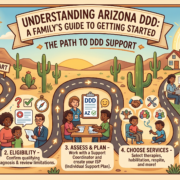
For most families, the path looks like this:
- Apply for and receive DDD eligibility
- Apply for and receive ALTCS (financial + medical)
- Choose a DDD Health Plan
- Meet your Support Coordinator and build your service plan
- Choose a provider agency to deliver your services
Frequently Asked Questions
Do I need both DDD and ALTCS? To receive funded long-term services like attendant care and habilitation, you generally need DDD eligibility and ALTCS funding. DDD confirms the disability; ALTCS pays for the services.
What’s the ALTCS income limit for 2026? For a single applicant, the gross monthly income limit is $2,982, and the countable asset limit is $2,000. These figures update every January.
What if we make too much money? An over-income applicant may still qualify by using a Miller Trust (income-only trust). And for children, ALTCS often counts only the child’s income and resources — so ask before assuming you don’t qualify.
How long does ALTCS approval take? Typically 60 days to a few months. A complete application with medical and financial documentation ready to go moves faster.
What if my child has autism but doesn’t seem to have major limitations? Eligibility depends on both a qualifying diagnosis and significant functional limitations in at least three major life areas. It’s possible to have a diagnosis and still not meet the functional-limitation threshold, which is why thorough documentation matters.
Feeling overwhelmed by the paperwork? You don’t have to figure it out alone. We help Arizona families connect the dots between DDD, ALTCS, and the services their loved ones need. Get in touch to learn more.
This article is for general information and isn’t legal, medical, or financial advice. ALTCS figures and rules change; verify current limits with ALTCS at azahcccs.gov or 1-888-621-6880.









Leave a Reply
Want to join the discussion?Feel free to contribute!