

How Many Hours of Care Can You Get Through DDD?
It’s the question on every family’s mind once they’re approved: How many hours of care will we actually receive? The honest answer is that there’s no flat number — DDD care hours are based on your loved one’s assessed needs, not a fixed allotment. Here’s how the process works and what shapes the number you’re authorized.
Please note: Arizona has been actively revising how care hours for minor children are assessed. The general process below still applies, but the specific assessment tool and rules have been in flux. Always confirm the current process and your loved one’s authorization with your DDD Support Coordinator.
Hours Are Based on Need, Not a Set Amount
DDD uses a person-centered approach. Rather than handing everyone the same number of hours, the program looks at what each individual actually needs to be safe, healthy, and supported at home. Two people with the same diagnosis can be authorized for very different amounts of care, because their needs differ.
This is determined through an assessment your Support Coordinator completes with your family, which then shapes your Person-Centered Service Plan (PCSP) — the document that authorizes your services.
How the Assessment Works
The process generally looks like this:
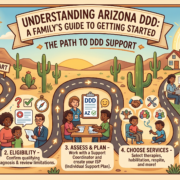
- Your Support Coordinator meets with you and your loved one. They gather information about daily needs, often through interview and observation.
- An assessment tool is used to help translate those needs into service hours for things like Attendant Care, Habilitation, and Homemaker services.
- Your planning team develops the service plan. You’re part of this team — your input matters.
- Hours are authorized in your PCSP, and services can begin.
- The plan is reviewed regularly, and hours can be adjusted if needs change.
Once ALTCS-approved, members complete a full person-centered service plan with their Support Coordinator and team each year, with additional reviews as needed.
What Affects the Number of Hours
Several factors influence your authorization, including:
- The individual’s level of need across daily activities like bathing, feeding, mobility, and supervision
- Safety considerations, such as whether the person can be left alone
- The specific services involved (Attendant Care, Habilitation, Respite, and Homemaker are assessed differently)
- Age and developmental stage, which shape what level of assistance is expected
- Available natural and community supports, which the person-centered process takes into account
A Note on Recent Changes for Children
Arizona introduced a new assessment tool for home and community-based services in late 2025 and then paused it after hearing concerns from families. During that period, hours for members under 18 were handled based on their most recent prior assessment while the tool was revised. The state also outlined an Extraordinary Care Review process for children under 18 who need more direct-care or habilitation hours than an assessment shows.
Because this area has been changing, the most reliable source for your child’s current hours is your Support Coordinator. If you feel an assessment doesn’t reflect your child’s real needs, ask about the Extraordinary Care Review and your appeal rights.
If You Think Your Hours Are Too Low
You have options:
- Talk with your Support Coordinator first. Make sure the assessment fully captured your loved one’s needs — sometimes important details get missed. (Our guide on working with your Support Coordinator has tips for these conversations.)
- Ask about the Extraordinary Care Review if it applies to your situation.
- Appeal a reduction or denial. If your services are reduced, denied, suspended, or terminated, you have the right to appeal. See our DDD appeals guide.
Different Services, Different Limits
Keep in mind that services follow different rules:
- Attendant Care and Habilitation are assessed based on daily-living and skill-building needs.
- Respite is typically subject to an annual limit set through your plan.
- Homemaker services are based on household-task needs tied to the member’s disability.
Frequently Asked Questions
Is there a maximum number of hours DDD will provide? Hours are based on assessed need rather than a universal cap, though specific services (like respite) may have their own limits. Your Support Coordinator can explain what applies to your loved one.
Why did my neighbor’s child get more hours than mine? Because hours reflect individual assessed needs. Even children with the same diagnosis can have very different levels of need, which leads to different authorizations.
Can our hours change over time? Yes. Plans are reviewed regularly, and authorizations can go up or down as your loved one’s needs change.
What can I do if I disagree with my hours? Start with your Support Coordinator, ask about the Extraordinary Care Review if relevant, and use your appeal rights if services are reduced or denied.
Want an advocate who understands the system? We help Arizona families navigate assessments and get the services their loved ones need. Contact us to learn more.
This article is for general information and isn’t legal or medical advice. Assessment rules and service limits change; confirm current details with your DDD Support Coordinator or at des.az.gov.
This article is for general information and isn’t legal, tax, or medical advice. The PPCG program and related rules change; confirm current details with your DDD Support Coordinator, at des.az.gov, or at azahcccs.gov.








Leave a Reply
Want to join the discussion?Feel free to contribute!